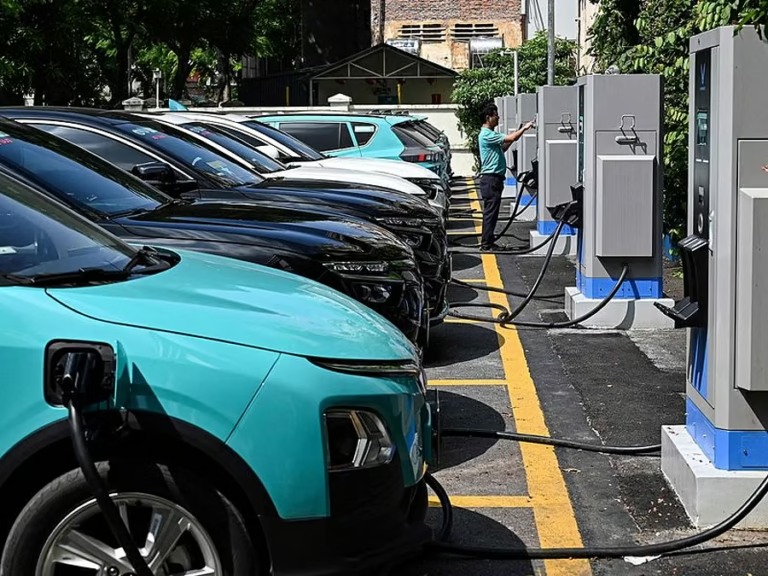

The global electric vehicle (EV) market in 2026 is dominated by an intense price war among leading regions — the U.S., China, and Europe. This battle for affordability is fueled by rapidly advancing battery technologies, government incentives, and fierce competition among automakers to capture growing consumer demand. In the U.S., Tesla continues to lead the market, adjusting its Model 3 and Model Y prices to attract budget-conscious buyers. China leverages mass production, local supply chains, and subsidies to offer some of the cheapest EVs globally, including models from BYD and NIO. Meanwhile, Europe balances sustainability, regulatory compliance, and competitive pricing strategies to maintain adoption momentum. For consumers, this price war translates into wider choices, better affordability, and accelerated access to cutting-edge EV technologies. Understanding this global price battle is critical for buyers, investors, and industry watchers navigating the 2026 EV market.
Understanding the Global EV Price War in 2026
The global EV price war in 2026 represents an aggressive effort by automakers and governments to reduce the cost of electric mobility. Consumer demand for EVs is skyrocketing as awareness of climate change and rising fuel costs increases. To stay competitive, manufacturers are lowering prices through optimized battery production, automation, and streamlined supply chains. Governments complement these strategies with tax incentives, rebates, and subsidies that make EVs more affordable. This price war also encourages technological innovation, driving improvements in battery efficiency, range, and safety. For buyers, the result is a dynamic market where affordability, technology, and environmental considerations converge, creating unprecedented opportunities to own electric vehicles at competitive prices.
What is the Global EV Price War?
The global EV price war is the competitive push among countries and automakers to offer the lowest-cost electric vehicles without compromising quality. This phenomenon is driven by rising global demand, environmental regulations, and the need to encourage EV adoption. Companies reduce prices by innovating battery technologies, improving manufacturing efficiencies, and leveraging government incentives. The price war shapes market strategies, influences global supply chains, and impacts consumer decisions. Buyers benefit from a larger selection of vehicles at various price points, while automakers strive to maintain profitability amid intense competition.
Key Players: USA, China, and Europe in the EV Market
The U.S., China, and Europe are key players in the EV market, each leveraging unique advantages. The U.S. is innovation-driven, with Tesla pioneering EV performance, software, and safety features. China dominates in production volume and affordability, enabling companies like BYD and NIO to offer competitively priced models. Europe focuses on sustainable manufacturing and regulatory compliance, offering incentives to make EVs accessible to consumers. Together, these regions drive global competition, technological advancements, and affordability, shaping the EV industry worldwide.
Why Countries Are Competing for the Cheapest Electric Vehicles
Countries compete to offer the cheapest EVs to stimulate domestic adoption, attract investments, and strengthen their automotive industries. Lower prices encourage consumers to shift from fossil-fuel vehicles to cleaner alternatives, supporting climate goals. Manufacturers gain market share and achieve economies of scale, while governments use affordability as a tool to advance technological leadership. This competition ensures that EVs become accessible to more consumers, fostering innovation, driving down costs, and accelerating the transition to sustainable transportation globally.
Comparing EV Prices: USA vs China vs Europe
Comparing EV prices across the U.S., China, and Europe highlights striking differences influenced by production costs, subsidies, and local policies. In the U.S., high labor and material costs keep prices relatively high, although Tesla and other automakers are adjusting 2026 pricing to improve affordability. Chinese EVs, such as BYD and NIO, are significantly cheaper due to local production efficiencies and government incentives. European EVs balance pricing with environmental compliance, offering moderate prices supported by subsidies. For buyers, understanding regional price variations is critical for identifying the most cost-effective options while maximizing technology and value.
EV Prices in the USA: Trends and Tesla EV Price Updates 2026
EV prices in the U.S. are influenced by labor, raw materials, and brand positioning. Tesla has adjusted its 2026 pricing for the Model 3 and Model Y to attract a broader audience, reflecting both competitive pressures and government incentives. Other American manufacturers are also exploring pricing strategies to compete globally. Tax credits and rebates further reduce effective costs for buyers. Consumers benefit from increased affordability, variety, and advanced EV features, making it easier to transition to sustainable transportation without sacrificing performance or technology.
EV Pricing in China: Why Electric Cars Are Cheaper
China’s EV market benefits from cost-efficient manufacturing, local battery production, and generous subsidies, resulting in some of the cheapest electric cars globally. Companies like BYD and NIO optimize production and supply chain logistics, reducing retail prices. Government incentives, streamlined regulations, and economies of scale allow Chinese EVs to compete internationally. Affordable pricing encourages higher domestic adoption and strengthens China’s position as a global EV leader. These cost advantages also make Chinese EVs attractive in export markets, intensifying global competition.
European EV Market Pricing Strategies
European EV pricing strategies focus on affordability, sustainability, and compliance with strict emissions regulations. Subsidies, tax breaks, and incentive programs help reduce consumer costs, while automakers invest in local battery production and partnerships to lower manufacturing expenses. European EVs may still be priced higher than Chinese alternatives due to labor and regulatory costs, but incentives help maintain accessibility. This approach ensures that Europe remains competitive in the global EV market while advancing environmental goals and technological innovation.
EV Price Comparison 2026: USA vs China vs Europe
In 2026, EV price comparisons show the U.S. with premium pricing, China offering highly affordable models, and Europe balancing cost and sustainability. Price differences arise from battery costs, production scale, incentives, and logistics. Buyers need to consider total cost of ownership, including maintenance, incentives, and energy efficiency. This comparative analysis empowers consumers to make informed decisions, ensuring they choose EVs that meet their needs, budgets, and expectations in a competitive global market.
Factors Driving the Global EV Price Competition
The global EV price competition is driven by several key factors. First, battery technology advancements reduce production costs, enabling automakers to lower retail prices. Second, government incentives, subsidies, and tax rebates play a crucial role in affordability. Third, economies of scale achieved through mass production in China and partnerships in Europe create cost advantages. Finally, competitive pressures force automakers worldwide to continually adjust pricing to maintain market share. These factors collectively fuel the global EV price war, reshaping strategies and improving accessibility for consumers.
How Automakers Adjust EV Prices to Compete Globally
Automakers adjust EV prices globally by leveraging cost reductions in production, streamlining supply chains, and adopting flexible pricing strategies for different markets. Discounts, incentives, and financing options are used to attract buyers in competitive regions. Companies like Tesla, BYD, and European manufacturers monitor global trends to maintain a balance between affordability, profitability, and innovation. Strategic pricing decisions are key to staying competitive in the fast-evolving EV industry, ensuring long-term growth and market relevance.
Impact of EV Battery Costs on Car Prices
Battery costs are a major determinant of EV pricing. Advances in lithium-ion and solid-state battery technologies have reduced costs per kilowatt-hour, allowing manufacturers to offer more affordable vehicles. In China, local battery production further reduces expenses, making EVs cheaper. In contrast, higher battery import costs in the U.S. and Europe contribute to relatively higher prices. Understanding battery cost impact helps consumers evaluate price differences, cost per mile, and total ownership expenses, ultimately aiding smarter purchasing decisions.
EV Subsidies and Incentives in the USA
The U.S. government offers tax credits, rebates, and incentives to promote EV adoption. These programs reduce effective purchase prices for consumers, making EVs more competitive with traditional vehicles. Incentives vary by state and vehicle type, influencing buyer decisions and market dynamics. Programs like federal tax credits for Tesla and other EVs in 2026 make higher-priced vehicles more accessible, encouraging widespread adoption while supporting the national transition to clean transportation.
Cross-Border EV Pricing Trends and Strategies
Cross-border EV pricing trends reveal competitive strategies as manufacturers respond to global demand and production efficiencies. Chinese automakers exporting affordable models to the U.S. and Europe influence regional pricing strategies. American and European manufacturers adjust prices to maintain market share, often considering tariffs, shipping, and local incentives. This dynamic environment drives competitive pricing, encourages innovation, and ensures consumers worldwide benefit from improved affordability and technology.
How the Global EV Price War Impacts Consumers
The global EV price war directly benefits consumers by improving affordability, increasing options, and accelerating access to advanced technology. Buyers can choose from a wider range of models, compare costs per mile, and take advantage of government incentives. Competitive pricing also encourages automakers to enhance features such as range, safety, and software capabilities. Understanding the implications of the price war enables consumers to make informed decisions, optimize value, and select EVs that best suit their financial and practical requirements in 2026 and beyond.
Electric Vehicle Affordability for U.S. Buyers
U.S. buyers enjoy increased affordability due to competitive pricing, federal and state incentives, and financing programs. Lower costs for popular EVs, such as Tesla models, allow more Americans to access clean transportation. Additionally, growing market competition between domestic and imported EVs encourages further discounts and promotions. Affordability is a key factor influencing adoption rates, helping consumers transition from traditional gasoline vehicles to electric alternatives while maintaining access to advanced features and technology.
Cheapest EV Models Available in the U.S. 2026
The cheapest EV models in the U.S. in 2026 include Tesla’s entry-level Model 3, BYD’s imported compact EVs, and select European small EVs supported by incentives. These models provide competitive pricing without sacrificing essential features, range, or reliability. Buyers can optimize cost-efficiency by evaluating price per mile, energy consumption, and available rebates. Understanding the affordability landscape empowers consumers to select EVs that align with budgets, driving higher adoption rates in the rapidly growing American EV market.
EV Cost Per Mile Comparison: Choosing the Most Economical EV
Cost per mile is a critical metric when comparing EVs, reflecting both electricity consumption and vehicle efficiency. U.S. buyers can calculate cost per mile to determine long-term savings compared to gasoline cars. Chinese imports may offer lower upfront costs, while U.S. domestic models provide strong efficiency and technology integration. By analyzing cost per mile alongside incentives and maintenance expenses, consumers can identify the most economical EV choice, ensuring maximum value for investment and reduced long-term operating costs.
How the Price War Affects Car Buyers in America
The global EV price war affects American buyers by expanding choices, improving affordability, and encouraging better technology in lower-priced vehicles. Price adjustments from Tesla, BYD, and European imports create competitive pressure, benefiting consumers through lower purchase costs and enhanced features. Buyers can take advantage of federal and state incentives to reduce effective expenses. The competitive environment fosters innovation, making EVs more practical and desirable for mainstream adoption while enabling U.S. consumers to participate fully in the electric mobility revolution.
Top Affordable Electric Cars for U.S. Consumers
In 2026, U.S. consumers have access to a wide selection of affordable EVs, from entry-level domestic models to competitive imports. Automakers focus on delivering value without compromising performance, safety, or technology. Options include Tesla’s Model 3, BYD compact EVs, and cost-effective European alternatives. Strategic pricing, incentives, and financing solutions make these vehicles accessible to a broad audience. By evaluating features, cost per mile, and total ownership, consumers can identify the most practical and budget-friendly options to suit their individual needs while embracing sustainable transportation.
Best Cheap EVs for 2026
The best cheap EVs for 2026 combine affordability, reliability, and technology. Popular choices include Tesla Model 3, BYD Dolphin, NIO ET5, and select European compact EVs. These vehicles provide practical range, efficient battery performance, and modern features at lower prices. Buyers seeking value without compromising performance can benefit from evaluating these models in terms of total ownership cost, cost per mile, and incentives. Affordability, combined with technology, ensures broader adoption and allows consumers to participate in the EV market while saving on long-term expenses.
BYD vs NIO Price Comparison: Chinese EVs in the U.S. Market
Chinese EVs like BYD and NIO are increasingly competitive in the U.S., offering lower prices than domestic alternatives. BYD models generally have lower upfront costs, while NIO emphasizes technology and performance. Both brands leverage cost-efficient production and subsidies to maintain affordability. Price comparison helps U.S. buyers identify models that best meet their budget, technology expectations, and range needs. The presence of these imports intensifies competition, pushing domestic manufacturers to adjust pricing while improving features to retain market share.
Tesla EV Price Trends and Affordable Options
Tesla continues to lead the U.S. market with innovative vehicles and dynamic pricing strategies. In 2026, entry-level Model 3 and Model Y options have become more accessible, reflecting both competitive pressures and incentives. Tesla balances affordability with cutting-edge technology, software updates, and battery efficiency. Buyers benefit from long-term savings, low cost per mile, and strong resale value. Understanding Tesla’s pricing trends helps consumers plan purchases strategically, ensuring they access high-quality EVs without exceeding budget limits.
Future Trends in Global EV Pricing
Global EV pricing is expected to evolve as battery technology improves, production scales expand, and competition intensifies. Emerging technologies, such as solid-state batteries and faster-charging systems, will reduce manufacturing costs, enabling even more affordable EVs. Global price trends will continue to be influenced by subsidies, cross-border competition, and environmental policies. Consumers will benefit from greater choices, reduced prices, and enhanced technology. Automakers must strategically navigate these trends to maintain competitiveness while addressing sustainability goals and expanding EV adoption worldwide.
Predictions for EV Price Competition in 2027 and Beyond
By 2027, global EV price competition will likely intensify further. China will maintain an edge in affordability, while U.S. manufacturers focus on technological leadership and premium options. European automakers will continue balancing regulation-driven costs with subsidies. Prices are expected to decline overall as battery technology matures and mass production scales increase. Buyers can anticipate broader accessibility, improved features, and lower total ownership costs, driving higher adoption rates across all markets and solidifying EVs as mainstream transportation solutions globally.
How Emerging Technologies Will Influence EV Costs
Emerging technologies, including solid-state batteries, AI-driven energy management, and improved charging infrastructure, will significantly reduce EV costs. These innovations increase energy efficiency, extend battery life, and lower production expenses. As manufacturing processes advance, automakers can pass savings to consumers, creating more affordable EV options. Technology adoption ensures EVs become increasingly accessible without compromising performance, accelerating global adoption and reshaping the competitive landscape in the automotive industry.
The Role of EV Market Competition in Shaping Consumer Choices
Global EV competition shapes consumer decisions by driving affordability, innovation, and availability. Competitive pricing encourages buyers to consider multiple options, compare cost per mile, and evaluate total ownership expenses. Automakers respond to market pressure by offering enhanced features, optimized battery efficiency, and improved performance. This dynamic ensures that consumers benefit from high-quality vehicles at accessible prices while influencing the broader adoption of electric mobility, ultimately creating a healthier, sustainable, and technologically advanced automotive ecosystem worldwide.