
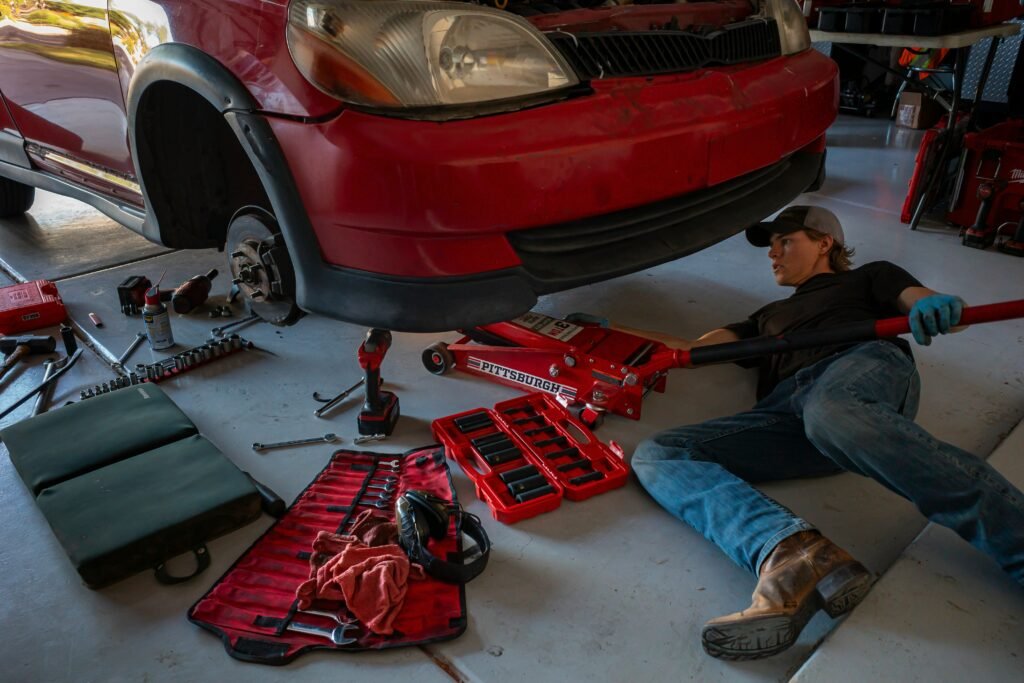
Master DIY vehicle repairs. Step-by-step tutorials on diagnosing check engine lights, changing brake pads, and replacing car batteries safely.
Symptoms of Failure: Slow engine crank, dim headlights, low voltage warning on display.
Required Tools: 10mm socket wrench, terminal cleaner brush, protective gloves.
Safety Protocol: Always disconnect the Negative (Black / -) terminal first to prevent electrical short circuits. Reconnect the positive terminal first during installation.
Service Interval: Every 12,000 to 15,000 miles.
Impact on Performance: A clean air filter improves engine airflow efficiency, preventing poor throttle response and reduced fuel economy.
Execution: Unclip the airbox housing, remove the dirty paper element, vacuum loose debris, and drop in the fresh filter element.
| Error Symptom | Potential Root Cause | Recommended Action |
| Squealing noise when braking | Worn brake pad wear indicators | Inspect pad thickness; replace if under 3mm |
| Engine vibrates at idle | Misfiring spark plugs or dirty fuel injectors | Scan OBD-II port for cylinder misfire codes |
| Vehicle pulls to one side | Uneven tire pressure or misaligned tracking | Check PSI levels; perform wheel alignment |