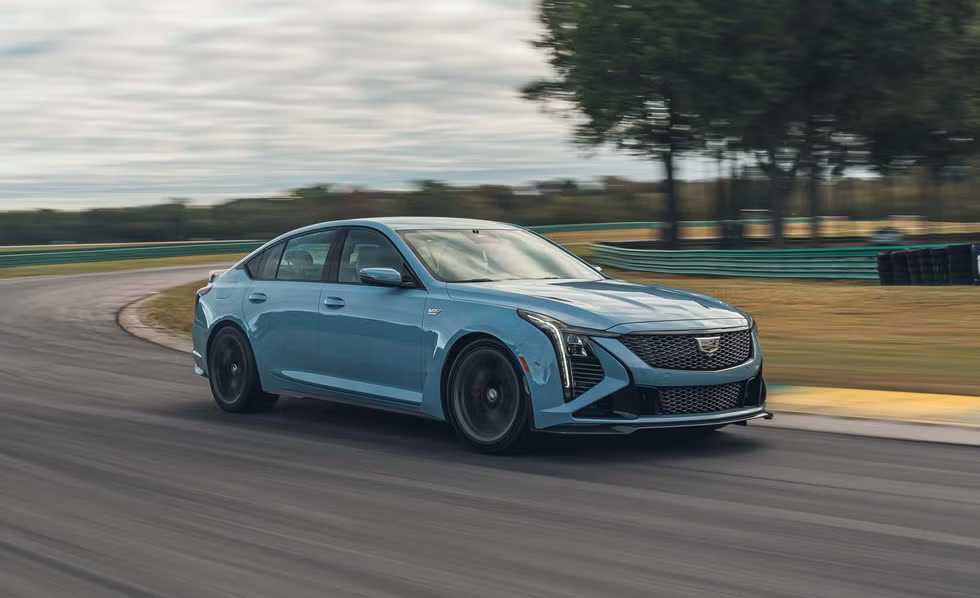

The electric vehicle (EV) market is undergoing a revolution, and 2026 brings some of the most budget-friendly options yet for drivers in the USA. Affordable electric cars 2026 offer a combination of sustainability, advanced technology, and practicality, making them accessible to first-time EV buyers and families seeking cost-effective alternatives to traditional gasoline cars. These vehicles provide excellent mileage, low maintenance costs, and access to tax incentives and rebates, ensuring that owning an EV doesn’t break the bank. From compact city cars to family-friendly SUVs, the latest models focus on safety, efficiency, and convenience. With prices starting under $30,000, drivers can enjoy features like fast charging, long-range batteries, and modern infotainment without compromising on quality. For budget-minded drivers, choosing a 2026 EV is not just an economical decision—it’s a step toward greener commuting, long-term savings, and a technologically advanced driving experience, proving that affordability and performance can go hand in hand.
Why Affordable Electric Cars Are Gaining Popularity in 2026
In 2026, affordable electric cars are gaining traction in the USA due to falling battery costs, expanding charging infrastructure, and growing environmental awareness. More drivers are recognizing the financial benefits of EV ownership, including lower fuel costs, reduced maintenance, and eligibility for federal and state incentives. Additionally, automakers are introducing high-value EVs designed to compete with traditional gasoline cars in both price and performance. Compact models with efficient batteries cater to city commuters, while budget-friendly SUVs appeal to families seeking versatility. The increasing availability of EVs under $30,000 has also expanded options for first-time buyers. Overall, affordability, convenience, and sustainability combine to make electric vehicles a viable choice for cost-conscious Americans who want to embrace the future of transportation without overspending.
Key Trends Driving Budget EV Adoption in the USA
Budget EV adoption is fueled by technological advancements, such as improved battery energy density, which extends driving range without raising prices. The introduction of modular platforms allows manufacturers to produce multiple EV models at lower costs. Government incentives, including federal tax credits and state rebates, further reduce upfront costs for consumers. Urban areas with growing EV infrastructure make city driving more practical, while manufacturers are prioritizing safety and user-friendly features even in lower-priced models. Rising fuel prices also motivate buyers to consider electric alternatives. As a result, the combination of affordability, convenience, and long-term savings is encouraging more Americans to adopt electric cars as a reliable and budget-conscious mode of transportation.
Benefits of Choosing an Affordable EV Over a Traditional Car
Affordable EVs offer numerous advantages compared to conventional vehicles. Reduced fuel costs are the most immediate benefit, as electricity is generally cheaper than gasoline. Maintenance costs are also lower due to fewer moving parts, no oil changes, and reduced brake wear thanks to regenerative braking systems. Budget EVs provide a quieter, smoother driving experience, making daily commuting more comfortable. Many models now include advanced safety features, infotainment systems, and smartphone connectivity, enhancing convenience without increasing costs. Environmental benefits are another key factor, as EVs produce zero tailpipe emissions, supporting cleaner air and reduced carbon footprint. Choosing an affordable EV in 2026 represents a smart combination of financial savings, technology, and sustainability.
How to Choose the Best Affordable Electric Car in 2026
Selecting the right budget EV requires careful consideration of multiple factors. Buyers should evaluate battery range, charging options, safety ratings, and overall cost of ownership. Compact cars are ideal for city driving, while larger sedans and SUVs suit families. Features like fast charging, regenerative braking, and driver assistance systems enhance convenience and safety. Comparing models under $30,000 allows buyers to identify vehicles that balance price, performance, and reliability. Additionally, researching available tax incentives and rebates can significantly reduce the initial investment. Ultimately, understanding your specific driving needs, lifestyle, and budget ensures that your 2026 EV choice is both practical and cost-effective, maximizing value while embracing sustainable transportation.
Factors to Consider: Battery Range, Charging, and Safety
Battery range is a critical consideration, as it determines how far you can drive on a single charge. For city driving, 150–200 miles may suffice, while longer commutes require 250+ miles. Charging infrastructure is equally important; ensure access to home chargers and public fast-charging stations. Safety ratings from organizations like NHTSA and IIHS should guide your choice, as affordable EVs increasingly offer advanced crash protection, lane-keeping assist, and automated braking. Evaluating these factors ensures reliability and peace of mind, making your investment in an affordable EV worthwhile while meeting daily commuting and family travel needs.
Budget-Friendly EV Features That Matter Most
Even budget EVs now come with essential modern features that enhance usability. Key features include fast charging capabilities, regenerative braking, touchscreen infotainment systems, and smartphone integration. Comfort features like adjustable seating, climate control, and intuitive dashboard layouts improve the driving experience without adding excessive cost. Connectivity features such as navigation apps, remote monitoring, and vehicle diagnostics help maintain efficiency and convenience. Choosing models that prioritize these practical yet essential features ensures that a low-cost EV delivers value, reliability, and a satisfying user experience, allowing drivers to enjoy technology typically reserved for premium vehicles.
Pros and Cons of Budget Electric Cars in 2026
Budget EVs offer many advantages, including lower operational costs, environmental benefits, and improved urban mobility. They are ideal for city commuting and offer access to government incentives that reduce purchase costs. However, there are some trade-offs: limited battery range compared to high-end models, fewer luxury features, and sometimes slower charging speeds at public stations. Space in smaller models can be constrained, which may affect family use. Understanding both the benefits and limitations of budget EVs allows buyers to make informed decisions, ensuring that the chosen model meets daily needs while delivering long-term savings and sustainability.
Top Value EVs in 2026: Best Budget Electric Cars in the USA
The 2026 EV market offers diverse options under $35,000, catering to commuters, city drivers, and families. Popular choices include compact sedans for efficient urban driving and small SUVs that balance range and cargo space. Many models come with advanced safety features, fast charging, and modern infotainment, proving that affordability doesn’t mean compromising quality. Automakers are increasingly providing attractive warranties and battery guarantees, reducing long-term ownership risk. With competitive pricing and a growing number of tax incentives, the best budget electric cars in the USA now deliver a compelling combination of technology, practicality, and value, making them an ideal choice for cost-conscious drivers seeking reliable, future-ready transportation.
Electric Cars Under $30k in 2026 – Full Comparison
For buyers seeking affordability, several EVs under $30,000 stand out. Models like compact sedans and hatchbacks provide 150–250 miles of range, sufficient for most daily commutes. Pricing aligns with tax incentives, further reducing costs. Features often include regenerative braking, basic infotainment, and essential safety systems. Comparing vehicles based on range, charging options, and warranty ensures maximum value. This price bracket is especially attractive for first-time buyers or city commuters, combining low upfront costs with the long-term financial benefits of EV ownership. Careful research ensures buyers select vehicles that balance budget constraints with practical performance and modern features.
Cheapest Electric Cars With Good Safety Ratings
Safety remains a priority, even for budget EVs. Models under $35k now include features like automatic emergency braking, lane-keeping assist, and collision warning systems. Organizations such as NHTSA and IIHS provide safety ratings to guide buyers. Compact EVs often perform well in urban crash tests, while slightly larger budget SUVs offer added protection for families. These affordable options ensure peace of mind without exceeding budget limits. By considering both affordability and safety, buyers can enjoy reliable, crash-tested EVs that meet modern safety standards, proving that low-cost vehicles don’t compromise on essential protective features.
Top Electric Cars With Long Battery Range Under $35k
EVs with long-range batteries under $35,000 are increasingly available in 2026. Many models now offer 250–300 miles per charge, making them practical for city commuting and occasional longer trips. Fast-charging support allows drivers to recharge in under an hour at compatible stations. Battery efficiency, combined with aerodynamic designs, contributes to extended range without increasing cost. These models are ideal for cost-conscious buyers who need flexibility and reliability for daily travel, offering the best of both worlds: low prices and sufficient driving range for most needs.
Best Small Electric Cars for City Driving
Small EVs are perfect for urban environments due to compact size, maneuverability, and energy efficiency. Models under $30k offer practical range, ease of parking, and lower running costs, ideal for city dwellers. Advanced safety features, regenerative braking, and smart infotainment make driving convenient and enjoyable. These cars are particularly attractive to first-time buyers, single professionals, or small families looking for cost-effective mobility solutions. With modern technology and affordability, small electric cars in 2026 combine practicality with eco-friendly commuting.