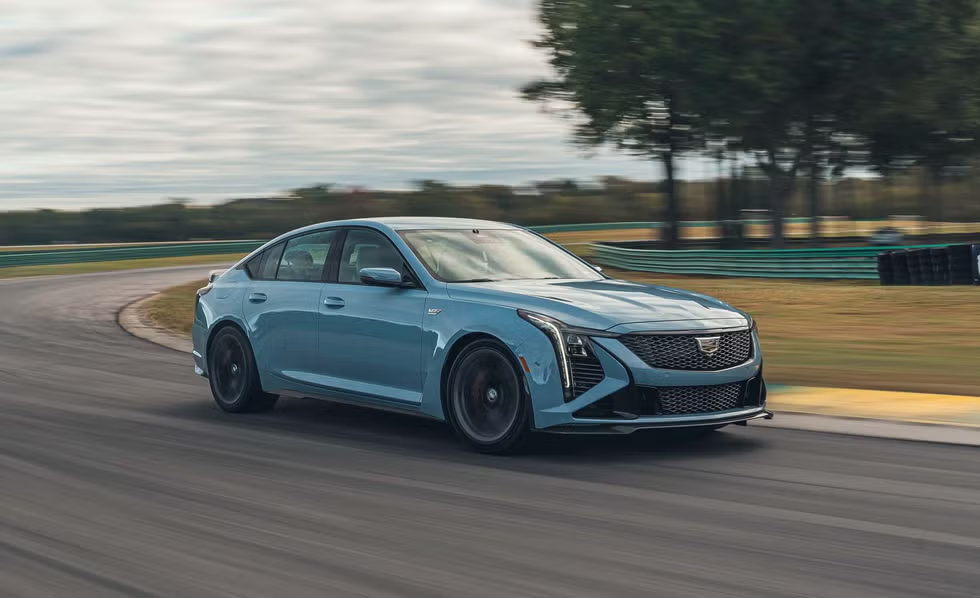

In 2026, the Advanced Driver Assistance Systems (ADAS) market in the USA is experiencing unprecedented growth, driven by technological innovation, consumer demand for safer vehicles, and regulatory pressures. ADAS technologies, such as lane departure warning, adaptive cruise control, and automated emergency braking, are now considered essential features in modern passenger cars and commercial trucks. The adoption of ADAS is reshaping the automotive landscape, enhancing vehicle safety, reducing accident rates, and enabling semi-autonomous driving capabilities. According to industry reports, the ADAS market size 2026 USA is projected to expand significantly, reflecting a combination of rising vehicle production, increased consumer awareness, and stricter safety regulations. With continuous advancements in sensors, cameras, and AI-driven software, automakers are integrating ADAS solutions to meet both customer expectations and compliance standards. Understanding these trends is critical for automotive stakeholders looking to capitalize on this rapidly growing sector.
Understanding ADAS and Its Importance in Modern Vehicles
Advanced Driver Assistance Systems are transforming the driving experience by providing real-time assistance, reducing human error, and enhancing overall safety. In 2026, ADAS adoption is no longer limited to luxury vehicles; mid-range passenger cars and commercial trucks are increasingly equipped with these systems. Their importance lies in proactive risk mitigation, accident prevention, and compliance with evolving US transportation safety regulations. By integrating technologies like blind-spot monitoring, automated parking, and collision avoidance, ADAS ensures safer journeys for drivers, passengers, and pedestrians alike. Furthermore, as vehicles become more connected, ADAS serves as a critical building block for autonomous driving, bridging the gap between manual control and full automation.
What is Advanced Driver Assistance Systems (ADAS)?
Advanced Driver Assistance Systems (ADAS) are electronic systems designed to enhance driver safety and convenience. They rely on sensors, cameras, radar, and artificial intelligence to monitor vehicle surroundings, detect potential hazards, and assist in navigation and driving decisions. ADAS technologies include lane-keeping assistance, traffic sign recognition, forward collision warning, and pedestrian detection, among others. These systems work together to reduce the likelihood of accidents and improve overall driving efficiency. In 2026, the scope of ADAS continues to expand, offering more sophisticated features that integrate with vehicle infotainment and telematics systems.
How ADAS Improves Vehicle Safety in 2026
ADAS contributes significantly to vehicle safety by minimizing human error and providing advanced warning systems. For example, adaptive cruise control ensures safe following distances, while automatic emergency braking can prevent collisions in sudden traffic stops. In 2026, AI-enhanced ADAS systems analyze real-time traffic and environmental data, enabling predictive safety measures. These improvements reduce injury risks, lower insurance costs, and enhance road safety statistics. By assisting drivers in high-risk scenarios, ADAS transforms driving from a reactive to a proactive safety approach, which is critical as urban traffic density and highway speeds continue to rise.
Benefits of ADAS in US Cars and Trucks
The adoption of ADAS in US vehicles delivers a range of tangible benefits. Drivers experience reduced accident rates, improved traffic flow, and less stress during long commutes. Fleet operators benefit from lower insurance premiums and fewer vehicle downtime costs. Passengers enjoy enhanced comfort through smoother driving assistance. Moreover, ADAS increases resale value for vehicles equipped with these systems. In 2026, the combined impact of consumer demand, government incentives, and technological improvements is making these benefits more accessible across vehicle categories, positioning ADAS as a standard expectation rather than a luxury feature.
ADAS Market Overview in the USA for 2026
The US ADAS market is undergoing rapid expansion, supported by strong automotive production and regulatory mandates for vehicle safety features. With advancements in AI, sensor technology, and vehicle connectivity, ADAS adoption is accelerating across passenger and commercial segments. Industry forecasts indicate significant growth in both unit shipments and revenue, reflecting a combination of rising consumer safety awareness and increased regulatory pressure. Key players in the market are leveraging partnerships, research investments, and software innovation to maintain a competitive edge. By understanding these market dynamics, automotive manufacturers and stakeholders can make informed decisions about ADAS integration and future mobility strategies.
ADAS Market Size 2026 USA: Key Statistics
In 2026, the ADAS market size in the USA is projected to surpass multi-billion-dollar valuations, driven by widespread vehicle integration and technological enhancements. Market research indicates a year-over-year growth rate of 15–18%, fueled by expanding consumer adoption and government mandates for safety systems. Passenger vehicles dominate the market share, but commercial vehicles are catching up due to fleet modernization initiatives. Key revenue drivers include sensor technologies, software development, and aftermarket ADAS solutions. These statistics highlight the robust demand for ADAS and emphasize the importance of strategic investments in this technology to maintain a competitive edge in the US automotive industry.
ADAS Growth Trends USA: Passenger & Commercial Vehicles
The growth of ADAS in US passenger and commercial vehicles follows distinct yet complementary trends. In passenger cars, demand is driven by safety-conscious consumers and rising interest in semi-autonomous features. In commercial fleets, logistics companies adopt ADAS to improve driver safety, reduce liability, and optimize operations. Across both segments, vehicle manufacturers are integrating multiple ADAS functionalities, including lane departure warning, adaptive lighting, and collision mitigation systems. As 2026 progresses, these trends indicate that ADAS will increasingly become standard rather than optional, reshaping both consumer expectations and automotive design priorities.
ADAS Market Report USA: Insights from Industry Leaders
Industry reports reveal that leading US automakers, including Ford, General Motors, and Tesla, are aggressively integrating ADAS across vehicle lines. Their strategies focus on combining advanced sensors, AI-driven decision-making, and user-friendly interfaces. Partnerships with technology providers are enabling faster deployment and cost-effective solutions. Market analysts indicate that automakers investing early in ADAS experience higher consumer trust and stronger safety ratings. Furthermore, regulatory compliance in the US is influencing design decisions, making ADAS a key differentiator in a competitive automotive market.
ADAS Market Predictions and Forecasts for 2026
Forecasts for 2026 suggest sustained growth in ADAS adoption, driven by regulatory enforcement, consumer safety awareness, and technological innovation. Analysts predict an increasing share of vehicles equipped with Level 2 and Level 3 automation features. Revenue streams are expected to expand, particularly in sensor technology, software licensing, and aftermarket ADAS upgrades. The continued rise of connected vehicles and smart infrastructure further reinforces market opportunities. These predictions underscore the importance of proactive strategies by automakers and technology providers to capture market share and align with evolving industry standards.